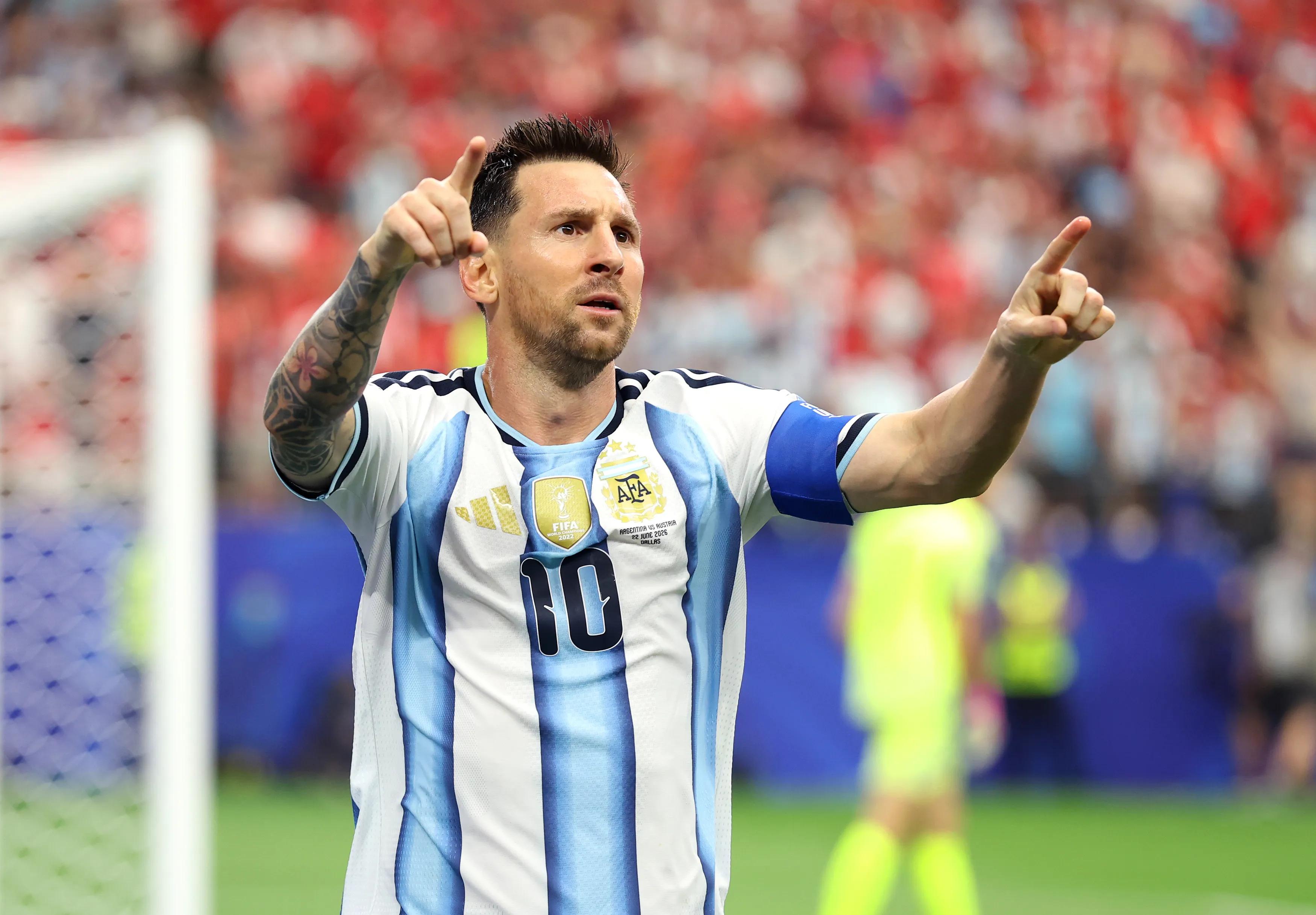
The ball crossing Austria's goal line in Houston Stadium's fifty-third minute confirmed Lionel Messi's position as the World Cup's all-time leading goalscorer. The achievement, accumulated across six tournaments spanning eighteen years, represented statistical dominance that previous football generations could not imagine. Messi's name now occupied the position that Gerd Müller, Just Fontaine, and other legendary strikers had approached but never reached, his career trajectory transcending historical benchmarks. The match against Austria provided appropriate context for this milestone. Austria's defensive organization, disciplined and intelligent, tested Messi's creativity throughout. The goal that achieved the record emerged from patient probing, Argentina's possession patterns creating pressure that eventually manufactured the space Messi required. His movement into the scoring position was subtle rather than dramatic, positioning that Austrian defenders recognized too late to prevent. Messi's execution of the goal demonstrated technical refinement that six World Cups had developed. His reception of the pass controlled possession while creating shooting angle, his body positioning disguising intention until execution moment arrived. The finish itself combined precision with power, the ball's trajectory precisely calculated to bypass Austrian goalkeeper positioning while maximizing goal frame coverage. The technique was vintage Messi, familiar to observers who had watched his World Cup performances across decades, yet each execution maintained quality that familiarity could not diminish. Houston's Argentine community celebrated the record with emotional intensity matching its significance. Diaspora supporters who had traveled across North America witnessed history in person, their presence reflecting the 2026 World Cup's unprecedented North American setting. These fans, maintaining Argentine identity through decades of immigrant life, now shared moments that previous World Cups' distant venues had denied. The record invited comparison with historical strikers whose achievements Messi had surpassed. Gerd Müller's fourteen World Cup goals, accumulated across two tournaments in the 1970s, had represented efficiency that subsequent generations approached but could not exceed. Just Fontaine's thirteen goals in a single 1958 tournament had demonstrated concentrated excellence that tournament format changes made statistically impossible to replicate. Messi's achievement combined Müller's sustained quality with Fontaine's tournament impact, his career spanning multiple tournaments while maintaining single-tournament excellence. Messi addressed the record in post-match comments with characteristic humility. He acknowledged the statistical achievement while emphasizing that World Cup success ultimately rewards teams rather than individuals. Argentina had won, had progressed, had demonstrated collective qualities that tournament advancement requires. His personal record was appreciated and celebrated, but it remained subordinate to Argentina's ongoing campaign. Messi's perspective reflected understanding that individual excellence serves collective objectives rather than replacing them, his record-breaking goal contributing to team victory rather than constituting victory itself.
"The Hermit: Wisdom guides the solitary effort."